Top-Rated Wholesale Smart Watch Models
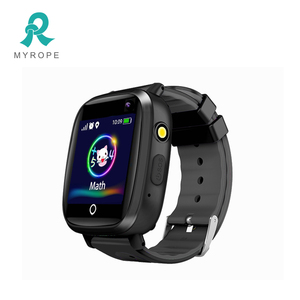
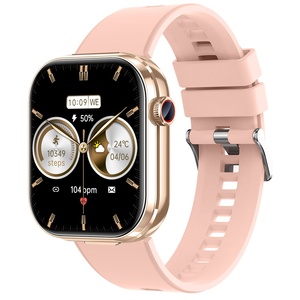
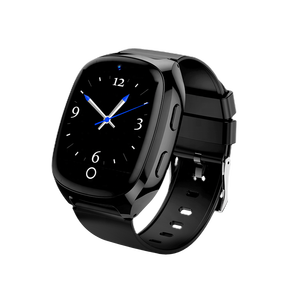
Direct-from-factory OEM/ODM wearable hardware equipped with cellular telemetry, real-time positioning, and medical-grade bio-sensors.
1. Executive Market Intelligence: Sourcing China's Smart Watch Manufacturing Capabilities
The global demand for connected child safety hardware has underwent a paradigm shift. What began as basic step-trackers and simple Bluetooth beacons has transformed into sophisticated, enterprise-grade telemetric personal safety gear. For global brand owners, telecom operators, consumer electronics importers, and government contractors, navigating the ecosystem of China Wholesale Kids GPS Smart Watch Factories & Suppliers requires a granular understanding of hardware engineering, signal processing algorithms, regulatory compliance, and cloud ecosystem architecture.
China’s Guangdong province—specifically the industrial technology corridors of Shenzhen and Dongguan—accounts for over 85% of global smartwatch production. This manufacturing density offers global procurement professionals unprecedented economies of scale, rapid prototyping cycles, and localized access to silicon vendors (such as UNISOC, MediaTek, and Nordic Semiconductor). However, selecting the ideal tier-1 original equipment manufacturer (OEM) or original design manufacturer (ODM) goes far beyond unit cost negotiation. It demands rigorous auditing of raw material traceability, RF calibration equipment, software server compliance, and factory-floor testing protocols.
2. Technical Deep Dive: Multi-Mode Positioning & Silicon Architectures
At the heart of any high-performance kids' GPS smartwatch is its multi-hybrid positioning system. Single-mode GPS is fundamentally insufficient in real-world environments due to satellite signal occlusion caused by urban canyons, high-density housing, and indoor school settings. Leading Chinese suppliers utilize a integrated 5-in-1 hybrid localization matrix:
GNSS / GPS + AGPS
Utilizes L1/L5 dual-frequency satellite acquisition combined with Assisted-GPS cell tower data for cold-start fix times under 3 seconds in direct line-of-sight environments.
Wi-Fi MAC Sniffing
Passively scans nearby BSSID router addresses without connecting to networks, cross-referencing global location databases to pinpoint indoor location within 5-15 meters.
LBS & Cell Tower Triangulation
Fallback telemetry connecting to 4G LTE VoLTE networks (Bands 1/3/5/7/8/20/38/40/41), maintaining connectivity when GNSS signals are completely blocked.
Cellular System-on-Chip (SoC) Platform Comparison
When evaluating supplier spec sheets, the choice of chipset dictates power consumption, thermal management, HD video calling capability, and OS smoothness. Below is an engineering benchmark comparison matrix across primary SoC platforms used in Chinese export factories:
| SoC Chipset Platform | Network Bands | Process Node | Video Call (VoLTE) | Power Efficiency | Ideal Target Market Segment |
|---|---|---|---|---|---|
| UNISOC W307 / 8521E | 4G LTE Cat-1 / VoLTE | 28nm HKMG | 720p HD @30fps | High (Optimized) | Mid-to-High Tier Retail & Telecom Brands |
| MediaTek MT6739 / MT6572 | 4G Cat-4 Quad-Core | 28nm CMOS | 1080p Full HD | Moderate (Requires 750mAh+) | Premium Smartwatches with Full App Store |
| ASR Microelectronics (ASR3603) | 4G LTE Cat-1 RTOS | 22nm FD-SOI | VGA / 480p | Ultra-High (Extended Standby) | Cost-Effective High-Volume Mass Market |
| Nordic nRF9160 (SiP) | NB-IoT / LTE-M | 64MHz ARM Cortex-M33 | Audio Only | Extreme (14-Day Battery) | Specialized Enterprise / Geo-Fence Trackers |
3. Enterprise Manufacturing Strengths & Factory Infrastructure
Operating as a specialized division of Intelligent Technologies, our manufacturing network bridges modern art-inspired industrial design with medical-grade electronic assembly line precision. Trusted by distributors and wholesale buyers across 50+ countries, our OEM/ODM ecosystem guarantees zero-defect manufacturing.
15+ Years Innovation
Over a decade and a half of engineering legacy in personal audio, smart wearables, and wireless telecommunications equipment.
50+ Countries Served
Global supply network compliant with local customs, frequency allocations, and regional cellular operator certifications.
10M+ Shipped Units
Proven mass-production capabilities with high-speed automated SMT lines and zero-tolerance quality assurance.
Certified Compliance
Full international certification portfolio including CE, FCC ID, RoHS, REACH, and ISO9001 factory audits.
200+ Active SKUs
Diverse hardware lineup ranging from IP68 ruggedized GPS watches to health telemetry monitors and consumer audio devices.
End-to-End White Labeling
Complete custom tooling, packaging, firmware flashing, and private cloud app development for brand owners.
4. Global Sourcing & Procurement Trends for Kids GPS Smart Watches
As enterprise procurement managers plan multi-year inventory cycles, several key hardware and market trends are shaping the future of kids' wearable technology:
A. eSIM Integration & Simplified Operator Provisioning
Traditional physical nano-SIM trays present water-ingress vulnerabilities and mechanical wear points. The industry is rapidly transitioning toward eSIM (embedded SIM) and vSIM (virtual SIM) technology. Factory-level eSIM integration eliminates SIM card slot components, boosting water resistance ratings to true IP68 (up to 1.5m submersed for 30 minutes) while allowing distributors to pre-program local network carrier profiles over-the-air (OTA).
B. AI-Assisted Geofencing & Predictive Safety Analytics
Modern cloud apps paired with Chinese factory platforms are integrating machine learning algorithms. Rather than relying solely on static circular safe zones, AI models analyze a child's daily travel routine. If a user deviates from their typical route between school and home at a specific time, automated notifications alert parents immediately, reducing false alarms while maximizing protection.
C. Non-Invasive Biosensing & Health Telemetry
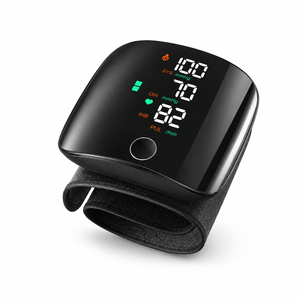
Following the integration of photoplethysmography (PPG) optical sensors in adult health monitors (such as wrist blood pressure, SpO2 blood oxygen, and optical heart rate trackers), factory production lines are standardizing sub-miniature skin-temperature sensors and optical monitoring into kids' safety wearables to monitor wellness metrics without compromising battery life.
D. Advanced SAR Radiation Risk Mitigation
Specific Absorption Rate (SAR) limits are becoming strictly enforced by telecom regulators globally (such as the FCC in North America limit of 1.6 W/kg and CE RED limit in Europe of 2.0 W/kg). Tier-1 manufacturers in China are incorporating advanced low-radiation antenna designs—such as Flexible Printed Circuit (FPC) LDS (Laser Direct Structuring) antennas embedded directly into the watch chassis—reducing RF radiation exposure to the head and wrist by up to 40% compared to legacy PCB antennas.
5. OEM/ODM Factory Audit Protocols & Regulatory Compliance
Ensuring high product reliability requires auditing a factory's quality assurance (QA) and quality control (QC) infrastructure. Buyers should mandate proof of the following standard testing procedures prior to issuing purchase orders:
Ingress & Drop Stress Testing
IP67/IP68 air-pressure seal testing for every individual casing. Tumbler drop-testing (1.2-meter steel plate impact over 1,000 cycles) to ensure structural integrity during active play.
Thermal & Battery Aging
Lithium-polymer battery cells undergo 72-hour high-temperature burn-in tests (55°C) and NTC thermistor short-circuit protection verification to prevent thermal runaway risk.
Data Privacy (COPPA & GDPR)
Kid safety wearables gather sensitive location data. Partnering with suppliers whose companion apps run on AWS/Azure ISO 27001-certified servers guarantees compliance with US COPPA and EU GDPR kids data protection privacy directives.