Featured OEM Connectivity & Hardware Solutions
Explore our CE-certified USB-C docking hubs, biometric smart wearables, and industrial health monitoring peripherals built for global distributors and enterprise fleets.
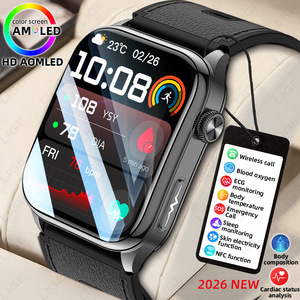
S101 AMOLED Air Pump Health Smartwatch & Hub Sync
- Air Pump Medical-Grade BP Sensing
- AMOLED HD Display & Bluetooth 5.3
- USB-C Charging Dock Compatibility
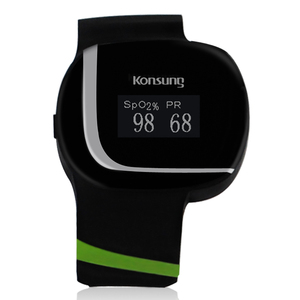
SONOSAT-W01LT IPX1 Smart WiFi SpO2 Wrist Oximeter
- Continuous Medical Telemetry Monitoring
- Cloud App & USB-C Telemetry Dock Sync
- IPX1 Water Resistant Casing
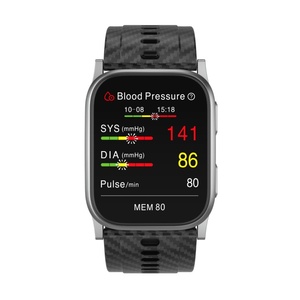
Medical-Grade Connected Body Temp & HR Smartwatch
- CE Certified ECG/ECG+PPG Sensor Suite
- Real-time Thermal Body Monitoring
- Enterprise Fleet Management API
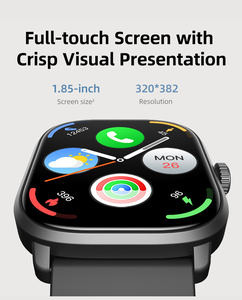
1.95" IP68 Rugged Smart Activity Tracker (BT 5.3)
- 350mAh High-Density Battery Cell
- Compass & Multi-Sport Tracking
- Magnetic USB-C Quick-Charge Cable
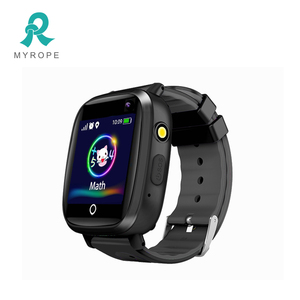
4G Cellular Waterproof GPS Smartwatch & Tracker
- Independent 4G Voice Call & Cellular Data
- GPS/LBS/WiFi Tri-Mode Location
- Heart Rate & Blood Pressure Telemetry
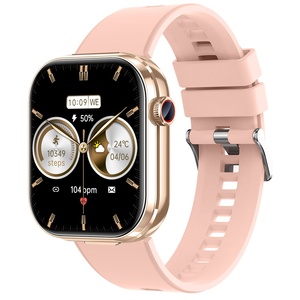
T99 2-in-1 Smartwatch with Integrated TWS Earbuds
- Dual Call Voice Recording & IPS Screen
- TWS Earbud On-Board Charging Bay
- Extremely Long Standby TPU Hardware
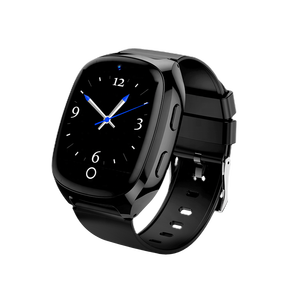
D300 4G GPS Elderly Telecare Watch with Fall Detection
- Automated Fall Detection & SOS Siren
- Body Temp & BP Health Monitoring
- Industrial-Grade Rugged Housing
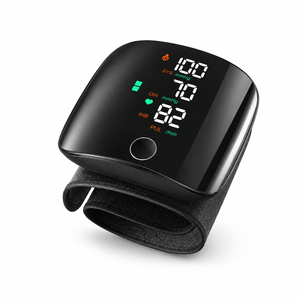
Wrist Digital BPM Health Monitor with USB Power Sync
- Oscillometric High-Precision Measurement
- Rechargeable Lithium Battery via USB-C
- CE Medical Compliance Approved
Executive Technical Summary: Navigating Modern USB-C & USB4 Enterprise Connectivity
As corporate IT ecosystems transition rapidly toward high-bandwidth hybrid workstations, CE certified USB C docking stations have evolved from simple port replicators into critical enterprise infrastructure components. Modern workplace standards require seamless signal routing for multi-monitor 4K/8K displays, bi-directional Power Delivery (PD 3.1), 10Gbps to 40Gbps data transport, Gigabit/2.5G Ethernet networking, and robust Electrostatic Discharge (ESD) protection—all housed within engineered thermal enclosures.
For B2B procurement directors, system integrators, and OEM brand buyers, selecting a verified manufacturing partner requires a deep technical understanding of chipset architectures, signal attenuation mitigation, regulatory compliance frameworks (CE-EMC, LVD, RoHS, WEEE), and multi-platform OS interoperability (Windows, macOS, ChromeOS, Linux). As a leading original design manufacturer (ODM) and division of Intelligent Technologies, we deliver art-inspired engineering backed by rigorous manufacturing standards to ensure ultra-low defect rates and maximum operational longevity across global corporate deployments.
1. The Engineering Anatomy of CE Certified USB-C Docking Stations
Achieving compliance with European Union CE standards (Conformité Européenne) requires a fundamental commitment to electromagnetic compatibility (EMC) and low-voltage electrical safety. A commercial USB-C dock operates under high-frequency differential signal lines alongside high-current power rails. Without precision engineering, high-speed data transmission generates radiated electromagnetic interference (EMI) that degrades 2.4GHz Wi-Fi signals and Bluetooth peripherals.
USB PD 3.1 & EPR Architecture
Support for Extended Power Range up to 240W (48V/5A), utilizing dynamic Power Delivery microcontrollers to protect host motherboards from over-voltage (OVP) and over-current (OCP).
Multi-Stream Transport (MST) ICs
Advanced DisplayPort 1.4a and HDMI 2.1 Alt Mode chipsets enabling dual 4K @ 60Hz or triple 4K @ 30Hz display outputs over a single Type-C connection.
Multi-Layer EMI & ESD Shielding
Integrated TVS diodes providing 15kV air discharge and 8kV contact discharge protection, combined with aluminum enclosure ground shielding to suppress noise.
A. CE Certification Regulatory Compliance Framework
When procuring USB-C docking stations for EU distribution or corporate enterprise rollout, compliance cannot be treated as a mere label. Full CE verification requires adherence to three mandatory directives:
1. EMC Directive 2014/30/EU: Docks are subjected to rigorous testing under EN 55032 (Class B Radiated and Conducted Emissions) and EN 55035 (Electromagnetic Immunity). Our hardware incorporates ferrite beads on differential pairs, multi-layer PCB ground planes, and fully shielded connector cages to eliminate spurious noise in corporate office settings.
2. Low Voltage Directive (LVD) 2014/35/EU: Docks carrying high-wattage power pass-through (up to 100W/140W) are evaluated under EN 62368-1 for audio/video and IT equipment safety. Thermal dissipation management ensures surface temperatures remain well under international threshold limits during full 100% duty cycle testing.
3. RoHS 3 Directive 2015/863 & WEEE Compliance: All internal components, lead-free solder pastes, board coatings, and structural plastics are strictly screened via X-ray Fluorescence (XRF) spectroscopy to ensure 100% freedom from heavy metals, phthalates, and restricted flame retardants.
2. Global B2B Sourcing Trends & Technology Forecast (2025–2030)
The enterprise workstation landscape is undergoing a structural evolution driven by laptop miniaturization, remote work mandates, and multi-monitor workflows. Key procurement trends shaping supplier selection over the next decade include:
Trend 1: Universal Convergence to USB4 2.0 & Thunderbolt 4/5 Standards
As Intel, AMD, and Apple align their silicon platforms around USB4 and Thunderbolt specifications, legacy USB 3.0 hubs are being phased out. Modern corporate tenders explicitly require 40Gbps bidirectional throughput, dynamic bandwidth sharing, and backward compatibility with USB 3.2 Gen 2x2. Forward-thinking procurement teams are standardizing on universal dock controllers (such as Intel Goshen Ridge or Synaptics Cayman chips) that seamlessly switch protocols based on host system capability.
Trend 2: Dynamic Power Allocation (DPA) and Smart GaN Integration
Legacy docks often allocate fixed wattage to external ports regardless of whether a peripheral is connected, wasting energy and starving the host laptop. Future-proof USB-C docks employ intelligent MCU-driven Dynamic Power Allocation. Furthermore, the integration of Gallium Nitride (GaN) power modules directly into the docking base eliminates external power bricks, delivering a streamlined desktop footprint with up to 95% power conversion efficiency.
Trend 3: Hybrid Bio-Sensor Data Passthrough & Enterprise Wearable Eco-Systems
As corporate wellness programs and medical IoT solutions expand, enterprise docking stations are increasingly designed to interface with medical-grade telemetry devices, health smartwatches (such as the S101 and SONOSAT series detailed above), and biometric access control modules. High-speed USB-C interfaces allow rapid multi-device data synchronization, batch firmware flashing, and automated battery replenishment across hospital wards, corporate health clinics, and remote monitoring centers.
Trend 4: Enterprise Remote Management (vPro & PXE Boot Integration)
IT departments managing global hardware fleets require docks that support MAC Address Pass-Through, PXE Boot, Wake-on-LAN (WOL), and out-of-band management protocols. CE-certified docks equipped with Realtek or DisplayLink enterprise network ICs allow system administrators to push security updates and BIOS patches overnight through the dock's Ethernet interface.
3. Technical Comparison & Selection Matrix for Enterprise Docks
To assist procurement managers in choosing the exact hardware configuration required for their operational deployment, the following matrix outlines key architectural specifications across standard enterprise tiers:
| Feature Spec | Travel / Portable Dock | Dual-Display Corporate Dock | Quad-Display USB4/TB4 Dock | Medical/IoT Specialized Dock |
|---|---|---|---|---|
| Target Upstream Host | Ultrabooks, Tablets | Corporate Laptops (Win/Mac) | Creative Workstations, CAD | Healthcare Telemetry / Smart Wearables |
| Max Bandwidth | 10 Gbps (USB 3.2 Gen 2) | 10-20 Gbps (DP Alt Mode) | 40 Gbps (USB4 / TB4) | 5 Gbps - 10 Gbps Data + Sensor Bus |
| Video Output Capability | 1x 4K @ 60Hz (HDMI) | 2x 4K @ 60Hz (HDMI/DP MST) | 4x 4K @ 60Hz or 1x 8K @ 60Hz | 1x 4K HD Dashboard Display |
| Power Delivery Pass-Through | Up to 100W PD 3.0 | Up to 100W PD 3.0 | 140W PD 3.1 EPR | Isolated Charging (Medical Safety) |
| Networking Interface | 1x Gigabit Ethernet (RJ45) | 1x Gigabit / 2.5G RJ45 | 1x 2.5G Ethernet + WOL | High-Speed WiFi / Bluetooth Gateway |
| Enclosure & Thermal Rating | ABS Polycarbonate Plastic | Extruded Aluminum Alloy 6063 | CNC Anodized Aluminum + Fan | Antimicrobial Polycarbonate Casing |
| CE Compliance Standard | EMC / RoHS 3 | EMC / LVD / RoHS 3 / WEEE | EMC / LVD / FCC / CE RED | CE Medical Directive / ISO 13485 |
4. Corporate Manufacturing Advantages: Why Partner with Us?
As a specialized division of Intelligent Technologies, our organization blends art-inspired industrial design with strict hardware engineering disciplines. We provide global buyers, distributors, and brand holders with an unbeatable OEM/ODM competitive advantage built upon four pillars:
⚙️ Advanced SMT & Automated Optical Inspection
Our high-speed Surface Mount Technology (SMT) lines feature 3D Automated Optical Inspection (AOI) and X-ray soldering inspection to verify 100% BGA pin integrity on high-density 10-layer docking station PCBs.
🔬 Rigorous Thermal & Signal Integrity Testing
Every motherboard design undergoes high-speed Signal Integrity (SI) simulation using Keysight oscilloscopes to prevent jitter and eye-diagram degradation, alongside 72-hour full-load thermal burn-in testing in environmental chambers.
🌐 Customized Enterprise Firmware & EDID Flashing
We provide full software customization for OEM clients, including custom EDID display profiles, custom vendor/product IDs (VID/PID), pre-flashed MAC address blocks, and bespoke driver packaging.
📦 Turnkey OEM/ODM Packaging & Certification Support
From custom aluminum anodization colors and laser-etched branding to complete EU Declaration of Conformity (DoC) documentation packages, we streamline your path to international retail and enterprise sales channels.
5. Deep User Intent Sourcing FAQ: B2B Procurement Guide
Below are authoritative technical responses to the most critical inquiries raised by enterprise IT buyers, electronic component sourcing agents, and global electronics distributors when evaluating CE-certified USB-C docking hardware.
Accelerate Your Global Sourcing Strategy
Partner with an established hardware engineering director and certified manufacturer. Request customized OEM sample evaluation units, volume wholesale pricing, or complete CE compliance dossiers today.