

Tech Trends, Guides &
Product Insights
Discover expert advice, ultimate buying guides, and latest product releases across wireless audio, smart wearables, and mobile accessories.
Why Is My Car Charger Adapter Not Working?
Table of Contents
- What a Car Charger Adapter Does and Why It May Stop Working
- How to Check the Vehicle’s Power Outlet and Electrical Supply
- How to Inspect the Charger Adapter, Cable, and Device Connection
- How to Identify Compatibility, Overheating, and Power-Output Problems
- When to Replace the Adapter or Seek Professional Electrical Help
- FAQS
- Conclusion
- Related Posts
A dead phone in the car is frustrating, especially when the dashboard socket looks perfectly normal. The problem may involve the Car Charger Adapter, the vehicle’s power outlet, the cable, or the phone itself. A small fault can interrupt charging completely. Sometimes, the adapter is working, but it cannot deliver enough power for a newer device.
Begin with the socket. Check whether another accessory works there, such as a small tire inflator or a different charger. Inspect the adapter for a loose USB port, cracked housing, burn marks, or unusual heat. Then test another charging cable. Cables fail more often than many drivers expect. Confirm that the adapter supports your phone’s charging standard, including USB-C Power Delivery when required. Never force a connection.
Richard Reina, an automotive technical expert and product training director, offers a practical reminder: “Start with the basics: power, connection, and compatibility.” That advice is easy to dismiss. It should not be. A blown vehicle fuse, dirty socket contacts, or an adapter with the wrong output can create identical symptoms. Check the vehicle manual before inspecting or replacing a fuse. Do not continue using an adapter that smells burnt or becomes excessively hot.
A replacement may seem like the obvious answer. It may not be. Testing each part separately gives you clearer evidence and prevents wasted money. If the socket remains dead after basic checks, professional inspection is sensible. Electrical problems can be less visible than they appear. Even careful troubleshooting has limits, and recognizing that limit is part of reliable maintenance.
What a Car Charger Adapter Does and Why It May Stop Working
Why Is My Car Charger Adapter Not Working?
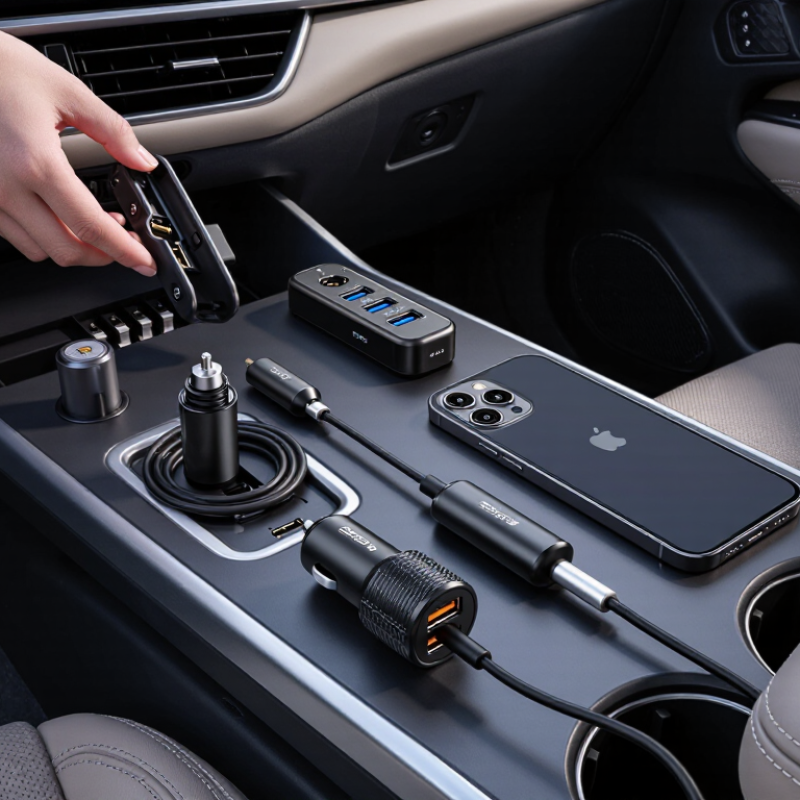
A car charger adapter converts power from the vehicle’s 12-volt accessory socket into a steadier USB output. Your phone receives a controlled voltage through that small circuit. The socket may work only when the ignition is on. Check that detail first. In practical troubleshooting, I inspect the socket with a flashlight and test it with another low-power accessory. Dust, coins, or a bent contact can interrupt power. A loose plug may also make charging start and stop while driving.
Heat is another warning sign. An adapter trapped under a seat can become unusually warm, especially during navigation and charging together. Unplug it if the casing smells burnt, feels very hot, or shows cracks. The vehicle’s accessory fuse may have failed, but never replace it with a higher-rated fuse. That can damage wiring. Check the cable too; a broken wire near the connector often looks normal from outside. I once focused on the adapter and overlooked the socket itself. That mistake matters. If the socket has no power with a verified accessory, the vehicle may need professional electrical testing. If the socket works but several adapters fail, the problem may involve unstable contact or excessive electrical load. Cheap construction can contribute, but careful testing is more reliable than guessing.
How to Check the Vehicle’s Power Outlet and Electrical Supply
A dead car charger often points to the vehicle’s power outlet, not the adapter. Turn the ignition off and remove the charger. Look inside the socket with a flashlight. Coins, dust, or a bent center contact can interrupt power. Never reach inside with metal tools.
Check the owner’s manual for the outlet fuse rating. Many accessory sockets use 10-amp or 15-amp circuits, but designs vary. A blown fuse needs replacement with the exact specified rating. A larger fuse can overheat the wiring. The National Fire Protection Association’s Vehicle Fires report estimated 209,500 vehicle fires annually in the United States from 2014 to 2018. Electrical failures were among the documented causes.
Use a digital multimeter for a clearer test. With the engine off, a healthy 12-volt battery usually reads about 12.4 to 12.8 volts. Start the engine, then test the outlet again. Charging voltage commonly rises near 13.7 to 14.7 volts, depending on the vehicle. Place the red probe on the center contact and the black probe on the outer metal wall. Do not force the probes together. A zero reading suggests a fuse, ground, or wiring problem. A low reading may indicate battery weakness or charging-system trouble. SAE J563 describes common accessory-plug and receptacle dimensions, yet vehicles can still differ. I once blamed the charger too quickly; the socket was simply loose. That mistake is easy to repeat.
Why Is My Car Charger Adapter Not Working?
Check the vehicle’s power outlet voltage under different operating conditions. These typical readings can help identify a weak battery, a charging-system issue, or a faulty outlet or adapter.
How to read the chart: A healthy 12-volt battery commonly measures about 12.4–12.7 V with the engine off. With the engine running, the outlet normally rises to approximately 13.5–14.8 V. If voltage remains low, check the fuse, outlet contacts, wiring, battery, and charging system.
How to Inspect the Charger Adapter, Cable, and Device Connection
Why Is My Car Charger Adapter Not Working?
A car charger adapter may fail because of a loose socket, damaged contacts, or insufficient power. Turn off the vehicle before inspecting it. Remove the adapter and check its metal tip for dirt, discoloration, or bent parts. A small amount of dust can interrupt contact. Use a dry, lint-free cloth to clean the adapter and socket. Do not insert metal tools into the socket. I once blamed the adapter too quickly, but the socket itself was the problem.
Inspect the charging cable from end to end. Look for crushed sections, split insulation, or connectors that feel unusually loose. Gently move the cable near each plug while watching the device. If charging starts and stops, the cable may have an internal break.
Check the device connection too. Remove any lint from the port with a suitable non-metallic tool, and avoid forcing the plug. Test the adapter with another compatible cable and device. This helps isolate the faulty part.
Tips: Start the engine before testing the charger, since some sockets remain inactive otherwise. Confirm that the device actually shows a charging symbol. If the adapter becomes hot, smells unusual, or repeatedly disconnects, stop using it. Check the vehicle’s fuse only with the owner’s manual and proper safety guidance. Cheap replacement cables can look fine but perform poorly. A careful inspection is slower, but it prevents guessing.
How to Identify Compatibility, Overheating, and Power-Output Problems
Why Is My Car Charger Adapter Not Working?
A car charger adapter may fail because it does not match your vehicle’s socket or device. Check whether the adapter fits firmly inside the outlet. A loose connection can interrupt charging whenever the car moves. Compare the adapter’s output rating with your phone, tablet, or navigation device. Some devices need more power than a basic adapter can provide. Charging may appear normal, but the battery level still drops.
Overheating is another warning sign. Feel the adapter after several minutes of use. It should be warm, not painfully hot. Heat can come from blocked ventilation, a damaged cable, or too much electrical demand. Stop using it if you notice a burning smell, melted plastic, discoloration, or repeated power cuts. Do not ignore small changes. I once assumed a weak connection caused the problem, but the cable was actually damaged near its plug.
Tips: Clean dust from the vehicle socket with the car turned off. Test the adapter in another compatible socket, if available. Try a different cable before replacing the adapter. Check the car’s socket fuse only through the vehicle manual or a qualified technician. Avoid charging several demanding devices at once. If the adapter remains hot or produces unstable output, replace it with a properly rated model. Even careful testing has limits. A hidden wiring fault may require professional inspection.
When to Replace the Adapter or Seek Professional Electrical Help
Why Is My Car Charger Adapter Not Working?
A dead car charger adapter is often blamed on the phone, but the socket may be the real problem. Turn off the vehicle and inspect the adapter, cable, and socket for dust, bent contacts, cracks, or dark marks. Try a different compatible cable and test the adapter in another vehicle. If it works elsewhere, the vehicle socket or its fuse deserves attention. Do not force the plug. It should fit firmly without wobbling.
Replace the adapter when its cable feels unusually hot, the housing smells burnt, or charging repeatedly starts and stops. Frayed insulation and exposed wires are clear warning signs. Replace it, even if it still charges occasionally. Intermittent power can damage connected electronics. I have seen drivers continue using a loose adapter because it seemed convenient. That decision usually made the problem worse. Cheap repairs can become expensive.
Seek professional electrical help when the socket remains dead after checking the vehicle’s manual and fuse, or when a replacement adapter also fails. A technician can test voltage safely and inspect the socket, wiring, and grounding. Stop using the vehicle socket immediately if you notice smoke, sparks, melting plastic, or heat around the dashboard. Avoid opening the adapter or bypassing a fuse. Those steps can create shock and fire hazards. A qualified technician may find a deeper wiring fault that a simple replacement cannot solve.
FAQS
The vehicle’s power socket may have no electricity. Check the socket before blaming the adapter.
Use a flashlight. Look for coins, dust, bent contacts, or a loose center connection. Never use metal tools.
Use a digital multimeter carefully. Test the center contact and outer metal wall without forcing the probes together.
With the engine off, it commonly reads about 12.4 to 12.8 volts. Running voltage often rises near 13.7 to 14.7 volts.
Read the vehicle manual and use the exact specified fuse rating. A larger fuse may overheat the wiring.
Inspect it from end to end. Look for crushed areas, split insulation, loose connectors, or charging that stops during gentle movement.
Replace it if it becomes unusually hot, smells burnt, has frayed insulation, or repeatedly disconnects. Occasional charging is not reassuring.
Get qualified help if the socket stays dead after basic checks. Stop immediately if you see smoke, sparks, melting plastic, or dashboard heat.
Test the adapter with another compatible cable and device. You can also test it in another vehicle. I once blamed the adapter too quickly.
Conclusion
A Car Charger Adapter converts power from a vehicle’s electrical system into a suitable charge for phones, tablets, and other portable devices. When it stops working, the problem may come from the vehicle’s power outlet, a blown fuse, loose wiring, or an inactive ignition circuit. Start by checking whether the outlet supplies power and whether other compatible devices work when connected. Inspect the adapter for cracks, bent contacts, unusual smells, or signs of heat damage, and examine the cable and device port for dirt, wear, or loose connections.
Compatibility and power output are also important. An adapter may fail to charge if its output is too weak, unsuitable for the device, or affected by overheating. Disconnect it and allow it to cool if it becomes excessively hot. If the adapter or cable remains unreliable, replacement is usually the safest solution. Persistent outlet problems, damaged wiring, or repeated fuse failures should be handled by a qualified automotive electrical professional.

Blog Tags: