
Tech Trends, Guides &
Product Insights
Discover expert advice, ultimate buying guides, and latest product releases across wireless audio, smart wearables, and mobile accessories.
2026 Top Fast Charging Adapter Suppliers for Global Buyers
Table of Contents
Global buyers evaluating Fast Charging Adapter suppliers in 2026 need more than an attractive price list. A compact adapter may look simple, yet its performance depends on power delivery, thermal design, component quality, and device compatibility. Small details matter. A poorly matched plug or inconsistent output can create delays after products reach distributors.
This guide introduces suppliers through practical purchasing factors, including product range, customization options, minimum order quantities, production capacity, and typical lead times. Buyers should also review sample units, quality-control procedures, warranty terms, and after-sales support. Ask for test reports and documentation relevant to the intended sales market, then confirm that documents match the exact model being purchased. A certificate for one product does not automatically cover another.
Supplier claims deserve careful checking. Request clear specifications for supported charging protocols, rated output, operating temperature, and connector options. Where possible, compare samples under realistic workloads rather than relying only on brochures. No supplier is perfect. Price, speed, and consistency can pull in different directions, and a polished factory profile cannot prove long-term reliability. Even so, structured checks help reduce avoidable surprises. The suppliers covered here represent options for different sourcing needs, from established product lines to flexible OEM and private-label services. Use the comparison as a starting point, verify current details directly, and weigh technical evidence alongside communication and delivery performance.
Fast Charging Adapters: Core Technologies and Product Types
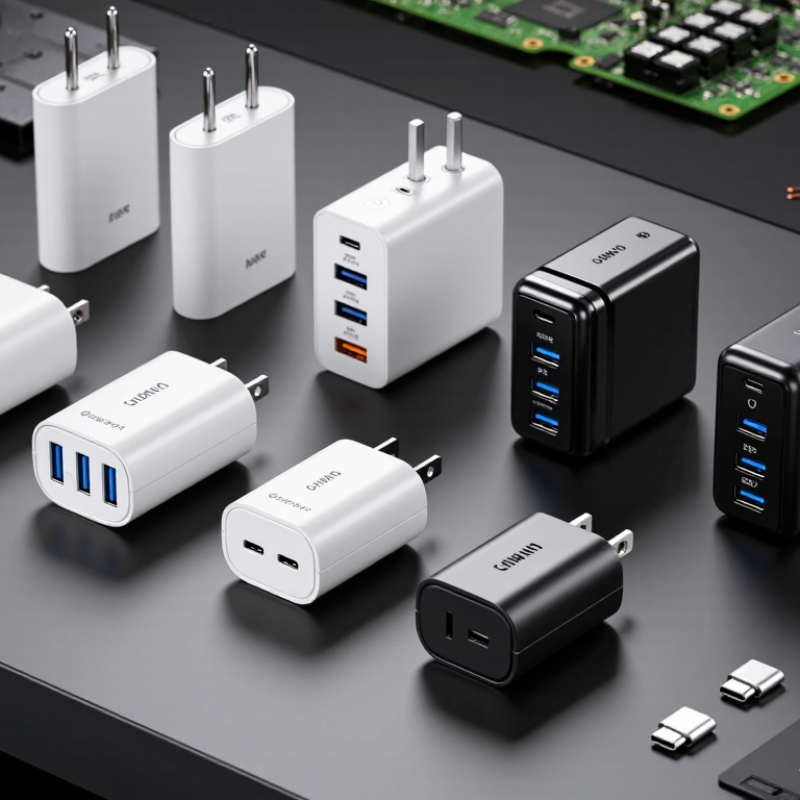
Fast charging adapters convert wall power into controlled output that a device can use safely and efficiently. USB Power Delivery supports negotiated voltage levels, while PPS can adjust voltage in smaller steps during charging. This helps compatible phones and tablets manage power with less unnecessary heat. GaN switching components can make adapters smaller, but compact size alone does not guarantee good performance. Heat still matters. A thoughtfully engineered unit balances output, thermal control, and electrical protection. In practical testing, check temperatures during sustained charging, not only during a brief connection. The difference can be easy to miss.
Product types range from single-port wall adapters to multiport chargers, travel models, and desktop units with several outputs. Single-port designs suit a phone or laptop; multiport models are useful when several devices share one outlet. Their total output may be divided across ports, so read the power allocation details. Travel adapters often use folding plugs, while desktop chargers typically provide more ports and longer cables. Match the adapter’s supported charging standards and wattage to the device, and use a cable rated for the intended power. Small details matter. Specifications can look impressive on paper, yet real charging speed depends on the device, cable, temperature, and active workload. Even careful comparisons leave some uncertainty.
2026 Top Fast Charging Adapter Suppliers for Global Buyers — Fast Charging Adapters: Core Technologies and Product Types
These are examples of USB Power Delivery fixed-voltage output combinations; power is calculated as voltage × current. Actual adapter capabilities vary. USB-C operation above 3 A requires an electronically marked cable, and EPR profiles require compatible EPR equipment and cables.
The Global Supplier Landscape in 2026
In 2026, the global supplier landscape for fast charging adapters is shaped by rising device shipments, varied regional demand, and tighter expectations for product consistency. IDC reported that worldwide smartphone shipments reached 1.24 billion units in 2024, up 6.4% from 2023. That scale keeps demand broad, but buyers should not assume every market needs the same adapter. A compact 30-watt model may suit travel retail, while a multi-port desktop unit fits shared workspaces.
Technical compatibility is a key sourcing filter. The USB Implementers Forum’s USB Power Delivery 3.1 specification supports power levels up to 240 watts, giving suppliers room to serve devices beyond phones. Yet a high wattage figure alone proves little. Buyers should check supported voltage profiles, thermal performance, port behavior, and test documentation. Ask for sample units and test them under sustained load. Small details matter.
Supplier strength also depends on production discipline. Review factory capacity, component traceability, quality checks, and plans for handling demand spikes. Request clear evidence for safety and performance claims, rather than relying on a polished product sheet. Regional distribution can shorten delivery times, though it may add another layer of quality oversight. And specifications can change. One useful question is whether the supplier can keep documentation aligned with each production revision. That part is easy to overlook.
How to Evaluate Fast Charging Adapter Suppliers
A supplier’s peak-wattage claim is only a starting point. Check whether test reports identify the exact adapter model, output profiles, and operating temperature. USB-IF’s USB Power Delivery 3.1 specification supports power levels up to 240 W, but that does not mean every device can use that power. Confirm protocol compatibility with your target devices, and request efficiency and thermal test results under sustained load. A cool-looking housing proves little.
Review safety documentation, factory quality controls, traceability, and change-notification practices. Ask for sample units from the same production process used for bulk orders. Compare performance across several samples; small variations can reveal weak process control. Reports should come from competent laboratories and match the product’s current components. A polished datasheet is not enough.
Tips: Request a full-load test log, not just a one-page certificate. Check cable requirements, warranty terms, and lead-time history. USB-IF’s PD 3.1 documentation is a useful reference for checking power claims. Still, paperwork can be incomplete, and supplier claims deserve independent verification.
Manufacturing Standards, Safety Certifications, and Compliance
For global buyers, a fast-charging adapter is only as reliable as its testing and production controls. Ask suppliers which safety standards apply in each destination market. IEC 62368-1 may be relevant for many audio, video, and information technology products, while local rules can add separate requirements. Confirm that certificates cover the exact adapter model, plug type, and rated output—not a similar product.
Look beyond a certificate file. Request test reports for electrical insulation, temperature rise, overload protection, and abnormal operation. A sample running on a bench is useful, but it does not prove every production unit performs the same way. Check how factories record component changes, inspect solder joints, and trace finished batches. Small details matter. A loose label or altered power component can complicate an otherwise careful compliance review.
Good suppliers can explain their quality process without hiding behind technical language. Ask for current certificates, laboratory details, product markings, and shipment-specific records. Verify documents with the issuing body when possible. Requirements differ by country, and a document accepted for one market may not satisfy another. That sounds straightforward. It isn’t always. Even experienced buyers can miss a model suffix or regional plug variation, so keep the review tied to the exact product being ordered.
Global Sourcing, Logistics, and Supplier Partnerships
Global sourcing for fast charging adapters depends on more than a competitive unit price. Buyers should confirm output ratings, plug configurations, packaging requirements, and test documentation before approving production. A sample can reveal loose port tolerances or a connector that feels warm during extended use. Small details matter.
Logistics planning needs the same attention. Ask suppliers how they prepare cartons for stacking, what shipment milestones they can report, and how they handle production delays. Compare quoted lead times with the time needed for inspection, export preparation, and delivery to your warehouse. Keep a buffer. It may feel inefficient, but one missed shipping window can disrupt a launch.
Strong supplier partnerships grow through clear records and regular conversations. Share demand forecasts, quality criteria, and changes to specifications in writing. Review defects together, using photos and batch details rather than vague complaints. Not every problem has an immediate fix. A delayed response or a confusing inspection note should prompt a closer look at the process, not an assumption that one meeting will solve everything. Revisit expectations after each order, and document what both sides would change next time.
FAQS
It converts wall power into controlled output a device can use. Supported charging standards help devices negotiate suitable power.
Power Delivery negotiates voltage levels. PPS adjusts voltage in smaller steps, which may help compatible devices manage heat.
No. Gallium nitride components can reduce adapter size, but compact design alone says little about sustained performance. Heat still matters.
A multiport or desktop model can share one outlet. Check its total output allocation; power may be divided when ports are active.
Match the wattage and charging standards, then use a cable rated for that power. Device workload and temperature also affect speed.
Inspect port fit and connector temperature during extended charging, not just after a quick plug-in. Paper specifications are not enough.
Confirm output ratings, plug configuration, packaging, and test documents. Ask how cartons are prepared for stacking, too.
Compare lead times with inspection, export preparation, and delivery. Keep a buffer. Track milestones and document delays; forecasts are never perfect.
Share demand forecasts and quality criteria in writing. Review defects using batch details and photos, then record agreed changes. One meeting may not fix it.
Conclusion
This guide explores the technologies and product types shaping the fast-charging adapter market in 2026, including how power delivery, charging efficiency, thermal management, and device compatibility influence product design. It also surveys the global supplier landscape, where manufacturers differ in production capacity, engineering expertise, customization options, and ability to serve international buyers.
For buyers, choosing a dependable Fast Charging Adapter supplier involves evaluating product performance, quality-control processes, communication, and long-term production capabilities. The guide also explains why recognized manufacturing standards, relevant safety certifications, and destination-market compliance matter when assessing products. Finally, it considers practical aspects of global sourcing, such as lead times, logistics planning, order coordination, and supplier partnerships, helping buyers make informed decisions and build resilient supply relationships.

Blog Tags: