
ZOOOK Official Tech & Lifestyle Blog
Audio Innovations and Wireless Speaker News
Smart Wearables and Tech Insights
ZOOOK Insights & Updates

Tech Trends, Guides &
Product Insights

Discover expert advice, ultimate buying guides, and latest product releases across wireless audio, smart wearables, and mobile accessories.

0%

Choosing the right Smart Watch supplier worldwide is more than comparing prices and product photos. A reliable partner must deliver consistent quality, accurate specifications, and dependable communication. This decision affects your brand reputation, customer satisfaction, and long-term operating costs.

Experienced buyers usually examine the supplier’s factory capacity, sample quality, minimum order quantity, and production lead time. They also check battery performance, sensor accuracy, waterproof claims, app compatibility, and packaging details. A practical test matters. Wear the sample for several days, review its charging behavior, and compare its readings with trusted devices. Ask for current certifications and laboratory reports, rather than relying only on sales promises.

A factory video can be useful. It is not proof by itself. Request clear production records, quality-control procedures, and references from comparable customers. Communication also reveals much. Does the supplier answer technical questions directly? Can the team explain software updates and warranty handling? These details often separate a capable manufacturer from a trading company with limited control.

Even experienced buyers sometimes choose the lowest quote too quickly. That mistake can create hidden costs through defective units, delayed shipments, or weak after-sales support. A balanced evaluation should consider product reliability, technical expertise, manufacturing experience, business transparency, and service responsiveness. This guide explains how to compare global suppliers carefully, identify practical risks, and build a partnership based on evidence rather than attractive promises.
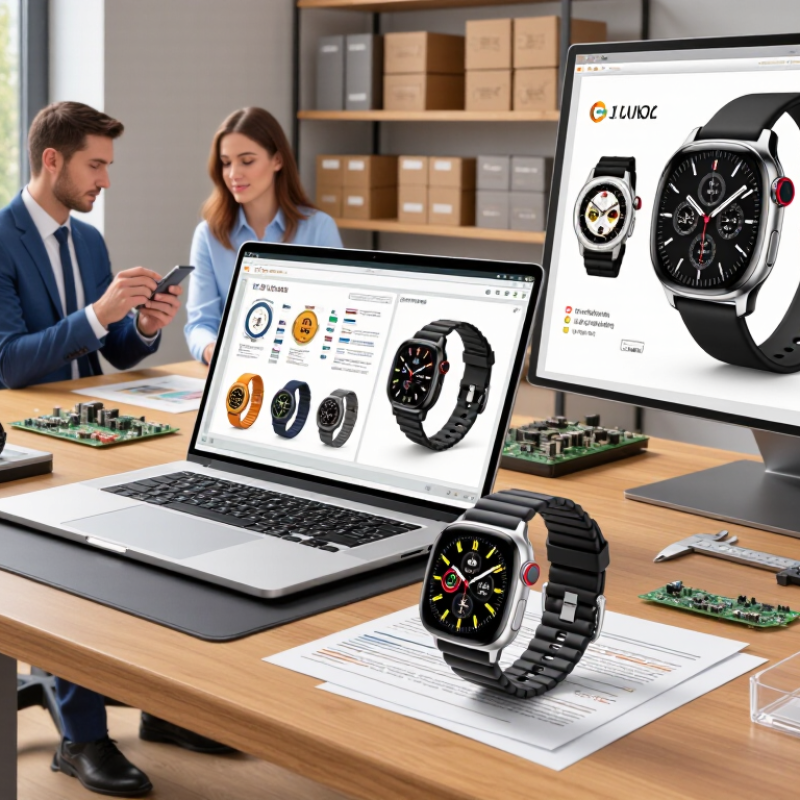
How to Choose the Best Smart Watch Supplier Worldwide?

Define Your Smart Watch Product Requirements and Target Market

When choosing a smart watch supplier worldwide, begin with the product you actually need. A vague brief creates vague quotations and expensive revisions. Define the display size, case material, battery target, sensors, water resistance, charging method, and supported languages. Decide whether the watch serves runners, office workers, older adults, or general users. For example, a fitness model may need accurate heart-rate tracking, GPS, sleep monitoring, and a comfortable strap. A budget model may need fewer sensors but stronger battery performance. Specify the expected retail price and sales channel, too.

It sounds simple. Yet markets differ sharply. My early product specification was too broad, and suppliers answered with incompatible solutions. I treated every feature as essential, which inflated cost and delayed testing. A better approach separates must-have functions from optional ones. Consider local climate, wrist sizes, phone compatibility, packaging preferences, and after-sales expectations. Privacy controls and lawful product certifications should match the target market. Do not assume one compliance file works everywhere.

Share a measurable requirement sheet with potential suppliers. Ask for sample units, test reports, component details, production capacity, minimum order quantities, and quality-control procedures. Compare actual samples, not polished presentations. Check battery endurance in realistic use, including notifications, exercise tracking, and frequent screen activation. A reliable supplier should explain limitations clearly and provide traceable inspection records. Allow time for firmware corrections. Small defects often appear after daily testing. Your target market may also reveal needs you overlooked. Revisit the brief before signing a production agreement.

Compare Supplier Types, Manufacturing Capabilities, and Product Quality

Choosing the best smartwatch supplier requires more than comparing catalog prices. Supplier type shapes control. A trading company may offer many models, but usually has limited influence over components and testing. A factory-direct manufacturer can adjust sensors, casing, firmware, and packaging more efficiently. An original design manufacturer can develop a private product, yet may require higher order volumes. Small brands often miss this point.

IDC’s Worldwide Quarterly Wearable Device Tracker reported 537.6 million wearable devices shipped globally in 2023. That scale increases pressure on suppliers to prove stable production, not merely attractive samples. Ask for monthly capacity, production-line photos, component traceability, and records from pilot runs. Capability should include automated assembly, battery aging tests, water-resistance checks, and firmware validation. Look for quality systems aligned with ISO 9001, while requesting relevant electrical and radio compliance documents. A certificate alone is not enough.

Product quality needs measurable evidence. Use an agreed AQL inspection plan, sample dimensions, screen-brightness limits, charging-cycle tests, and sensor-accuracy tolerances. Request third-party laboratory reports for battery safety, radio performance, and ingress protection. Counterpoint Research’s smartwatch market analyses show that demand is moving toward health and fitness functions, where inaccurate readings can quickly damage user trust. Do not judge quality from one perfect sample. I have seen production units vary because a supplier changed a connector without approval. Keep golden samples, approve every engineering change, and test random units from multiple batches. Perfection is not realistic. Poor traceability is avoidable.

How to Choose the Best Smart Watch Supplier Worldwide? - Compare Supplier Types, Manufacturing Capabilities, and Product Quality

Note: MOQ and lead-time figures are indicative industry ranges for standard smart-watch projects. Actual terms vary by specification, customization level, certification requirements, and production capacity.
Supplier Type Primary Role Typical MOQ Typical Production Lead Time Customization Capability Manufacturing Capabilities Common Quality Evidence Main Advantages Main Risks Best Fit
Original Equipment Manufacturer (OEM) Produces a buyer-defined product using the buyer’s specifications, design, or approved platform. Usually 500–5,000 units for standard models; higher for extensive customization. Approximately 30–90 days after sample approval and deposit. Medium to high; housing, logo, packaging, firmware settings, sensors, and app functions may be customized. Assembly, PCB integration, display installation, battery fitting, firmware loading, testing, and packaging. Quality-management certification, product test reports, traceability records, incoming inspection, and final inspection records. Direct production control, better engineering support, and clearer responsibility for product quality. Higher MOQ, longer development cycle, and possible dependence on the supplier’s existing hardware platform. Established brands, distributors, and buyers requiring repeatable private-label production.
Original Design Manufacturer (ODM) Offers an existing product design that can be adapted and sold under the buyer’s identity. Often 100–1,000 units for standard platforms; customized versions may require more. Approximately 15–60 days, depending on customization and component availability. Low to medium; color, strap, logo, packaging, language, and selected software functions are commonly adjustable. Platform-based assembly, firmware configuration, app integration, calibration, functional testing, and packaging. Sample approval records, component specifications, electrical safety reports, radio tests, and inspection reports. Faster market entry, lower development cost, and reduced engineering requirements for the buyer. Limited product differentiation, shared designs with other buyers, and less control over core hardware. Start-ups, online sellers, pilot launches, and buyers testing market demand.
Contract Manufacturer (CM) Manufactures according to the buyer’s drawings, bill of materials, process requirements, and quality plan. Commonly 1,000–10,000+ units, depending on factory capacity and process complexity. Approximately 45–120 days, including engineering validation and production ramp-up. High when the buyer supplies complete engineering documentation and approved components. Detailed assembly processes, automated or semi-automated testing, production-line controls, and scalable volume manufacturing. Process control plans, first-article inspection, defect-rate data, calibration records, and lot traceability. Strong production discipline, scalability, and compatibility with formal procurement systems. Requires strong buyer-side engineering, documentation, forecasting, and supplier-management capabilities. Large-volume programs, technically mature buyers, and products with tightly controlled specifications.
Trading Company or Sourcing Agent Coordinates sourcing, supplier communication, purchasing, inspection, logistics, and sometimes product customization. Often 50–500 units for catalog products; custom orders may require a higher MOQ. Approximately 20–75 days, plus time required for supplier coordination. Low to medium; customization depends on the selected manufacturing partner. Usually does not manufacture directly; manages outsourced assembly, packaging, inspection, and shipping. Third-party inspection reports, supplier certificates, product samples, purchase records, and shipment checks. Lower communication burden, access to multiple factories, and useful support for small or overseas buyers. Less direct control, additional margins, unclear factory identity, and variable accountability for defects. Small orders, first-time importers, and buyers needing sourcing or logistics assistance.
Vertically Integrated Manufacturer Controls several stages such as component sourcing, PCB assembly, product assembly, testing, and packaging. Typically 1,000–10,000+ units, with better economics at recurring volume. Approximately 30–90 days after product validation and material planning. Medium to high; engineering, industrial design, firmware, and production teams may be available internally. Component procurement, SMT or PCB integration, mechanical assembly, software loading, calibration, reliability testing, and after-sales support. Material traceability, reliability testing, audit records, process capability data, corrective-action reports, and final inspection results. Better supply-chain visibility, faster problem resolution, consistent process control, and stronger scale-up potential. May prioritize larger accounts, require more detailed technical communication, and offer less flexibility for very small orders. Long-term programs, regulated markets, high-volume buyers, and products requiring stable quality across batches.
Recommended Supplier Evaluation Checklist
  • Verify whether the supplier is a factory, contract manufacturer, trading company, or a combination of these roles.
  • Review production capacity, component sourcing, testing equipment, quality controls, and traceability procedures.
  • Request a production sample and compare it with an approved specification before placing a bulk order.
  • Confirm applicable safety, radio, battery, environmental, and market-entry compliance requirements for the target countries.
  • Use a written quality agreement covering acceptable defect levels, inspection stages, warranty terms, corrective actions, and delivery obligations.

Verify Certifications, Compliance Standards, and Factory Reliability

Choosing a smartwatch supplier worldwide requires more than comparing unit prices. Start by requesting current certificates for the exact model and factory. Check certification numbers, issuing bodies, test dates, and product versions. A certificate for another device proves little. Ask for reports covering battery safety, radio performance, electromagnetic compatibility, and materials. Requirements vary by destination, so confirm them with an independent compliance specialist. Online copies can be incomplete. Look for a functioning ISO 9001 quality system and testing through an ISO/IEC 17025-accredited laboratory, where applicable.

Factory reliability appears in the details. Request a live video tour or an audited site report showing assembly lines, calibration tools, storage areas, and quality checkpoints. Ask how rejected units are recorded and how firmware changes are controlled. Review production capacity, lead times, worker training, and backup plans for key components. Visit if possible.

My own mistake was trusting polished samples too quickly; suppliers may send their best batch. That risk deserves attention.

Use a small pilot order with written acceptance standards. Measure charging time, sensor consistency, screen response, waterproofing claims, packaging, and data security controls. Keep test photos and serial-number records. An independent laboratory can verify critical results before mass production. Speak with recent customers, but treat references carefully. They may describe an older factory process. Ask about late deliveries, failed inspections, corrective actions, and complaint response times. Reliable suppliers answer precisely, even when the answer is inconvenient.

Evaluate Pricing, Minimum Orders, Customization, and Delivery Terms

How to Choose the Best Smart Watch Supplier Worldwide?

Pricing, minimum orders, customization, and delivery terms reveal a supplier’s real reliability. A credible supplier provides a detailed quotation, not just a low unit price. Request separate costs for packaging, samples, tooling, software changes, and shipping. Compare the final landed cost. A low quote can become expensive after revisions and delays.

Minimum order quantities should match your sales forecast and cash flow. Ask whether the supplier accepts a smaller pilot order before mass production. For customization, confirm available case materials, screen options, interface languages, logo placement, and packaging details. Request a physical sample or a clear approval process. I once overlooked sample approval timing; production then moved faster than expected, but the result needed rework. That mistake was avoidable.

Tips: Put every detail in writing. Ask for milestone dates, inspection procedures, warranty coverage, and replacement terms. Confirm whether the delivery price includes customs handling or only transportation. Request recent production photos and independent test documentation when appropriate. A realistic supplier should explain risks instead of promising everything. Delivery terms deserve special attention. Clarify the trade term, shipping method, lead time, and delay response before paying a deposit. Allow extra time for quality checks and regional holidays. Five days of buffer may not be enough.

How to Choose the Best Smart Watch Supplier Worldwide?

Example supplier evaluation scores based on a 100-point procurement checklist. Pricing, minimum orders, customization, delivery reliability, and payment terms should be verified through quotations, samples, contracts, and production records.

A higher score indicates a more favorable sourcing position. The model gives equal importance to commercial terms and execution capability, helping buyers compare suppliers without relying on brand names.

Assess Communication, After-Sales Support, and Long-Term Partnership Potential

Choosing a smartwatch supplier requires more than checking price, certifications, and production capacity. Communication often reveals operational maturity. During a trial order, measure response time, technical clarity, and willingness to document changes. A small test order helps.

The Salesforce State of the Connected Customer report found that 80% of customers consider experience as important as products. This finding also applies to procurement teams. A reliable supplier should provide one accountable contact, weekly production updates, and clear answers about battery performance, software integration, and quality control. Avoid vague promises. Request written service-level terms, including response times, replacement procedures, and escalation contacts. For urgent technical issues, a 24-hour response target is practical, though not always realistic across time zones. Test it before signing a large contract.

After-sales support determines whether a supplier remains useful after shipment. IDC’s Worldwide Quarterly Wearable Device Tracker reported more than 500 million wearable device shipments globally in 2024, showing the scale and pressure of this market. High volume increases the cost of unresolved defects. Ask for failure-rate reports, spare-part availability, firmware support periods, and monthly complaint analysis. A supplier that shares root-cause reports demonstrates stronger expertise. Still, reports can be selective. Verify them through sample inspections and customer references. Long-term partnership potential depends on honest problem handling, not perfect presentations. Some suppliers will fail a test. That can be valuable evidence.

FAQS

What type of smartwatch supplier offers the most control?

A factory-direct manufacturer usually controls components, assembly, firmware, and packaging more closely. A trading company may offer more models but less production influence. An original design manufacturer can build private products, but larger orders may be required.

How can I verify a supplier’s real production capability?

Ask for monthly capacity, pilot-run records, production-line photos, and component traceability. Check automated assembly, battery-aging tests, water-resistance checks, and firmware validation. Photos alone are not enough.

What quality evidence should a supplier provide?

Request an agreed AQL inspection plan with measurable acceptance limits. Include screen brightness, charging cycles, sensor accuracy, and sample dimensions. Test random units from several production batches, not one attractive sample.

Which certificates and laboratory reports matter?

Request current documents for the exact model and factory. Check certificate numbers, issuing bodies, test dates, and product versions. Useful reports may cover battery safety, radio performance, electromagnetic compatibility, materials, and ingress protection.

How can I inspect factory reliability before mass production?

Request a live video tour or an audited site report. Review assembly lines, calibration tools, storage areas, and quality checkpoints. Ask how rejected units, firmware changes, worker training, and backup components are managed.

Why is a pilot order important?

A small pilot order reveals problems before large production begins. Test charging time, sensor consistency, screen response, packaging, and claimed water resistance. Record test photos and serial numbers. Small defects become expensive later.

How can I control engineering changes?

Keep an approved golden sample for comparison. Require written approval before changing connectors, sensors, firmware, or materials. Test replacement parts before production continues. Unapproved changes can create inconsistent units.

How should I evaluate customer references?

Speak with recent customers about late deliveries, failed inspections, corrective actions, and complaint response times. Ask when their products were manufactured. Older references may describe outdated factory processes. I trusted polished samples too quickly once. That was a mistake.

Conclusion

Choosing the best Smart Watch supplier worldwide begins with clearly defining your product requirements, target users, desired features, design preferences, and expected market position. Once these priorities are established, compare different supplier types according to their manufacturing capabilities, production experience, quality-control systems, and ability to deliver stable performance. A reliable supplier should also provide valid certifications, meet applicable compliance standards, and demonstrate factory reliability through transparent documentation, inspections, and consistent production records.

Cost is important, but it should be evaluated together with minimum order quantities, customization options, sampling policies, lead times, shipping arrangements, and payment terms. In addition, assess how effectively the supplier communicates, responds to technical questions, handles quality issues, and provides after-sales support. The strongest long-term partner is not always the cheapest option; it is the supplier that offers dependable quality, clear cooperation, flexible service, and continuous improvement. A careful evaluation process can reduce risks and support sustainable growth in the global Smart Watch market.

Eleanor

Eleanor

Eleanor is a dedicated marketing professional with a strong understanding of the company’s products, services, and customers. With a background in market research, content strategy, and business communication, she transforms complex product information into clear, practical, and engaging insights.......