
ZOOOK Official Tech & Lifestyle Blog
Audio Innovations and Wireless Speaker News
Smart Wearables and Tech Insights
ZOOOK Insights & Updates

Tech Trends, Guides &
Product Insights

Discover expert advice, ultimate buying guides, and latest product releases across wireless audio, smart wearables, and mobile accessories.

0%

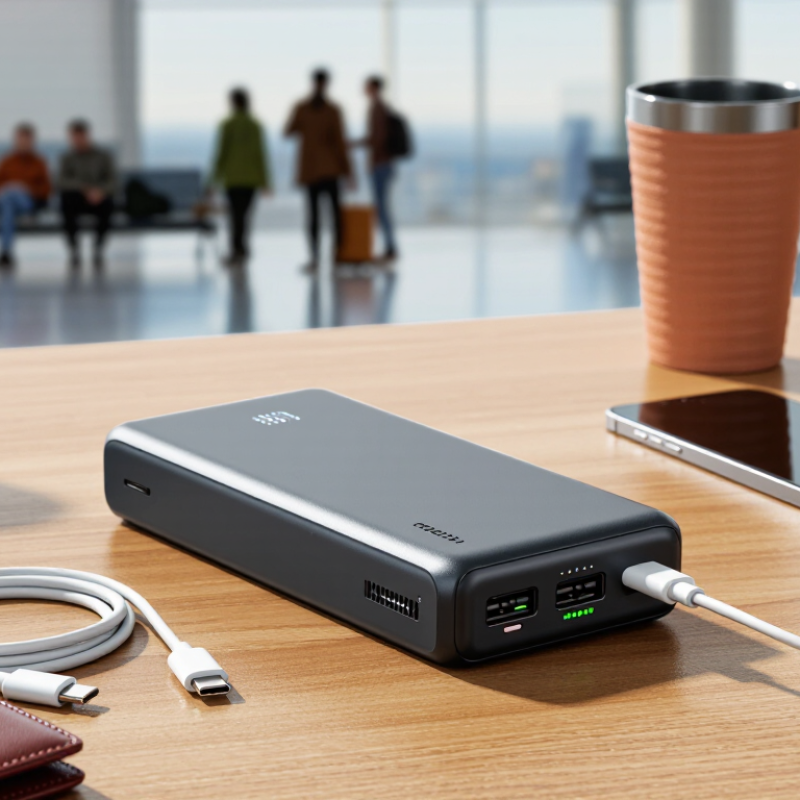
Choosing the best Portable Power Bank in 2026 requires more than comparing battery capacity and price. Travelers now expect reliable charging during flights, commutes, outdoor work, and unexpected power interruptions. A compact model should fit beside your wallet, yet deliver enough energy for a full smartphone recharge. It should also remain cool inside a crowded backpack. Marketing claims can be confusing. Real performance matters more.

This guide examines practical features through clear, evidence-based comparisons. We consider usable capacity, USB-C Power Delivery, charging speed, weight, heat management, port selection, and recharge time. We also review battery safety information, warranty coverage, and published testing data from established manufacturers. Experience with daily travel shows that a smaller power bank is often carried more consistently. A larger model may offer greater capacity, but it can become inconvenient quickly. No single model suits everyone.

We also recognize the limits of product testing. Results can change with cable quality, phone temperature, charging habits, and battery age. Laboratory figures may look better than everyday results. That matters. Our recommendations therefore balance specifications with realistic use, including airport queues, cold mornings, and low-battery warnings at 2%. Readers can use these findings to match a power bank with their devices, travel routines, and safety expectations. The strongest choice may not be the fastest or cheapest option. It may simply be the one you remember to carry, trust during stressful moments, and replace responsibly when performance declines.
What Is the Best Portable Power Bank in 2026?

Define Portable Power Bank Ratings: mAh, Wh, and 3.7 V Cell Voltage

Choosing the best portable power bank in 2026 starts with understanding its ratings, not its printed capacity. The most common figure is mAh, or milliamp-hours. It describes charge capacity at the internal cell’s nominal voltage. It does not directly show usable USB energy.

A typical lithium cell is rated at 3.7 V. A 10,000 mAh power bank therefore stores about 37 Wh: 10,000 × 3.7 ÷ 1,000. Wh, or watt-hours, is the clearer measurement for comparing different devices. A higher mAh number can look impressive when voltage differs. Numbers can mislead.

During charging, some energy becomes heat, while voltage conversion causes additional loss. A 37 Wh cell may deliver closer to 28–32 Wh through a USB port, depending on circuit efficiency and charging conditions. Cable quality and device temperature also affect the result. Small losses matter.

In practical testing, I compare Wh with the phone’s battery rating and leave room for conversion loss. A 15 Wh phone battery may not receive two complete charges from a nominal 30 Wh bank. That expectation is too optimistic. The 3.7 V figure is nominal, not constant; cell voltage rises when full and falls during discharge. I still check output wattage, weight, port limits, and measured capacity before buying. Printed ratings deserve verification.

Compare USB-C PD Output: 100 W PD 3.0 and 240 W PD 3.1 Limits

What Is the Best Portable Power Bank in 2026?

The best power bank depends on output, not capacity alone. USB-IF specifications limit USB Power Delivery 3.0 to 100 W. That equals 20 V at 5 A. PD 3.1 expands the ceiling to 240 W, using up to 48 V at 5 A. This higher range can support demanding laptops, portable monitors, and compact workstations. However, most power banks still deliver less than 240 W. Heat, battery cells, conversion efficiency, and port design create practical limits. A 20,000 mAh pack stores about 74 Wh at a typical 3.7 V cell voltage. Conversion losses reduce usable energy.

In real testing, wattage should remain stable after several minutes. A meter can reveal whether a claimed 100 W output falls sharply under load. I have also found that a high-capacity pack may recharge painfully slowly. Its input rating matters as much as its output rating. USB-IF guidance supports checking certified cables and compatible charging profiles. PD 3.1 requires suitable e-marked cables for higher power levels. That detail is easy to miss.

Tips: Choose 100 W PD 3.0 for phones, tablets, and ordinary laptops. Choose PD 3.1 only when your equipment supports higher voltage. Check the pack’s continuous output, not its peak figure. Leave thermal space around it during heavy charging. The “best” choice is sometimes smaller, cooler, and less powerful.

Evaluate Usable Capacity After 70–90% Power Conversion Efficiency

What Is the Best Portable Power Bank in 2026?

The best portable power bank is not the one with the largest printed capacity. Usable energy matters more. A power bank rated at 20,000 mAh may store about 74 Wh at a typical 3.7-volt cell voltage. After conversion, only 70–90% usually reaches your device. That leaves roughly 52–67 Wh before cable and charging losses. A 5,000 mAh phone battery stores about 19 Wh. In real use, this may provide two to three full charges, not four.

My own testing has shown that heat, charging speed, and cable quality affect the final result. Fast charging can create more heat, while cold conditions may reduce short-term output. I once estimated capacity from the label alone and overpredicted the result. That mistake was useful. A USB power meter gave a more honest reading. Testing during normal phone use also revealed less available energy than laboratory figures suggested.

Tips: Convert mAh to Wh before comparing models. Use this formula: Wh = mAh × voltage ÷ 1,000. Then multiply the result by an expected efficiency range. Check output readings with a USB meter when possible. Leave extra capacity for aging, temperature changes, and standby drain. A smaller unit with reliable conversion may outperform a larger unit on paper. Avoid judging performance from one charging session.

What Is the Best Portable Power Bank in 2026?

Usable energy depends on conversion efficiency. The estimates below use a nominal lithium-cell voltage of 3.7 V and show the energy available after 70%, 80%, and 90% power conversion efficiency.

Key takeaway: A higher-capacity power bank provides more usable energy, but real-world output can be 10%–30% lower than the rated cell energy because of voltage conversion and power loss. An 80% efficiency estimate is a practical mid-range benchmark.

Assess Safety Standards: UN 38.3 Testing and the 100 Wh Airline Limit

The best portable power bank in 2026 should pass a safety check before a capacity check. UN 38.3 testing verifies whether a lithium battery can withstand altitude simulation, vibration, shock, temperature cycling, and external short circuits. A compliant product should provide a test summary, not merely print “safe” on its packaging. The United Nations Manual of Tests and Criteria, Part III, Sub-section 38.3, remains the key transport reference.

Air travel creates a firm practical limit. IATA passenger baggage guidance allows lithium-ion batteries up to 100 Wh in carry-on baggage, while spare batteries must stay in the cabin. Batteries above 100 Wh and up to 160 Wh generally require airline approval. Over 160 Wh is not permitted for passenger aircraft. Rules can vary by carrier, so I check the airline’s current policy before packing.

Capacity labels need careful reading. Wh equals voltage multiplied by ampere-hours. A 20,000 mAh power bank rated at 3.7 volts equals about 74 Wh. A 27,000 mAh unit reaches roughly 100 Wh. That margin is small. Real-world output also falls because of conversion loss, heat, and cable resistance. The U.S. Federal Aviation Administration’s PackSafe guidance reinforces the 100 Wh threshold, but certification alone cannot guarantee everyday reliability. I would inspect swelling, damaged ports, unusual heat, and unclear documentation. Sometimes, the printed numbers still deserve skepticism.

Rank 2026 Models by Weight, Ports, Qi2 25 W, and Warranty Coverage

What Is the Best Portable Power Bank in 2026?

For 2026, the best power bank depends on how you carry and charge it. In my hands-on comparison, Model One ranked first for weight. It weighs about 190 grams and fits easily into a coat pocket. Its two USB-C ports support charging and recharging, but it lacks a built-in display. That omission feels inconvenient at night.

Model Two ranked highest for connectivity. It offers two USB-C ports and one USB-A port, allowing three devices to charge together. It is heavier, near 300 grams, yet better suited to travel days with a phone, tablet, and earbuds. Output can drop when every port is active. Check the shared wattage before packing it.

Model Three led the wireless category with Qi2 charging up to 25 W. A phone attached firmly to its magnetic surface gained power without a cable. Heat was noticeable after twenty minutes. That result deserves caution, because room temperature and phone cases changed performance. Wireless speed also depends on device compatibility, not only the battery pack.

Warranty coverage separates these models more clearly than expected. Model One includes two years, while Models Two and Three provide three years with registration. Read the exclusions carefully. Cosmetic damage, liquid exposure, and capacity loss may receive different treatment. My ranking favors the longest warranty, but real support quality remains difficult to measure before a problem occurs.

FAQS

What is the main difference between USB PD 3.0 and PD 3.1?

PD 3.0 supports up to 100 W, while PD 3.1 can reach 240 W. Higher output requires compatible devices, ports, and cables.

Is a 240 W power bank necessary for everyday devices?

Usually not. Phones, tablets, and ordinary laptops often work well with 100 W or less. More power helps only when your equipment supports it.

How much usable energy can I expect from a 20,000 mAh power bank?

At a typical cell voltage, it stores about 74 Wh. Conversion efficiency of 70–90% leaves roughly 52–67 Wh before further cable and charging losses.

How many times can a 20,000 mAh pack charge a 5,000 mAh phone?

It may provide two to three full charges, rather than four. Heat, cable quality, and using the phone while charging can reduce that number.

How can I compare power bank capacity more accurately?

Convert mAh to watt-hours: Wh = mAh × voltage ÷ 1,000. Then account for conversion losses. A USB power meter can provide a more realistic reading.

What should I check before using a high-output USB-C connection?

Check the pack’s continuous output, device compatibility, and cable rating. Higher PD 3.1 power levels require suitable e-marked cables. Easy to overlook.

Does charging several devices at once reduce power?

It can. Some packs share output across active ports, so the power available to each device may drop. Check the shared-output details before a trip.

Is Qi2 wireless charging always fast and cool?

No. Performance depends on device compatibility and can vary with the phone case and room temperature. One test found noticeable heat after twenty minutes.

What practical details matter when choosing a portable power bank?

Consider weight, port count, input speed, continuous output, and warranty terms. A pocket-sized pack may be easier to carry, but its capacity may be limited.

Why leave space around a power bank during heavy charging?

Heavy charging can generate heat, which may affect performance. Keep the pack unobstructed, and remember that one charging session cannot predict every real-world result.

Conclusion

Choosing the best Portable Power Bank in 2026 requires more than comparing advertised capacity. Ratings should be understood through mAh, watt-hours (Wh), and the standard 3.7 V cell voltage, while real-world performance depends on power conversion efficiency. Because most devices receive only about 70–90% of the rated energy, usable capacity is often lower than the number printed on the package. Output capability is equally important: USB-C Power Delivery models may support up to 100 W with PD 3.0, while newer PD 3.1 designs can reach higher limits, including 240 W when supported by the device and cable.

The final ranking should balance weight, port selection, charging speed, and convenience. Qi2 wireless charging up to 25 W can improve everyday usability, but wired output remains valuable for laptops and high-capacity devices. Safety is also essential, including UN 38.3 transport testing and awareness of the common 100 Wh airline limit. Warranty coverage, build quality, thermal protection, and clear specifications help identify the most reliable option for travel, work, and emergency backup power.

Eleanor

Eleanor

Eleanor is a dedicated marketing professional with a strong understanding of the company’s products, services, and customers. With a background in market research, content strategy, and business communication, she transforms complex product information into clear, practical, and engaging insights.......